
Gardening Tips Include Mowing
A few magazine articles mention the newly-invented lawnmower during the 1830s but the general point about mowing a lawn regularly is rarely seen. This began to change at the start of the 1840s and this article suggests mowing the lawn without specifically mentioning the lawnmower itself. This is interesting because at the time fewer than 2000 lawnmowers had been sold so relatively few readers would have been in a position to follow the advice. However, at this time "mowing" would also have referred to cutting the grass with a scythe. Did the author simply mean this or did they really mean the reader to think of the lawnmower?
It is also interesting to reflect that even today, gardening programmes on TV and regular features in newspapers and magazines continue to propose the jobs that should be done over the coming week.
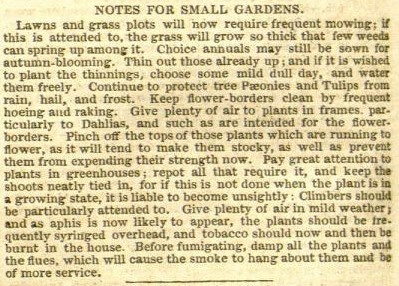
NOTES FOR SMALL GARDENS.
Lawns and grass plots will now require frequent mowing; if this is attended to, the grass will grow so thick that few weeds can spring up among it. Choice annuals may still be sown for autumn-blooming. Thin out those already up; and if it is wished to plant the thinings, choose some mild dull day, and water them freely. Continue to protect tree Paeonias and Tulips from rain, hail, and frost. Keep flower-borders clean by frequent hoeing and raking. Give plenty of air to plants in frames. particularly to Dahlias, and such as are intended for the flower- borders. Pinch off the tops of those plants which are running to flower, as it will tend to make them stocky, as well as prevent them from expending their strength now. Pay great attention to plants in greenhouses; repot all that require it, and keep the shoots neatly tied in, for if this is not done when the plant is in a growing state, it is liable to become unsightly: Climbers should be particularly attended to. Give plenty of air in mild weather; and as aphis is now likely to appear, the plants should be fre. quently syringed overhead, and tobacco should now and then be burnt in the house. Before fumigating, damp all the plants and the flues, which will cause the smoke to hang about them and be of more service.
PublicationGardeners ChronicleDateSourceBiodiversity Heritage Library/Gardeners Chronicle/1841/04/P64Link