
Stroud and The Industrial Revolution
Stroud and the surrounding area played a significant role in the industrial revolution.
Historically, sheep farming and wool production were significant industries that had been growing since medieval times.
The natural landscape, which included several rivers, allowed water wheels to power a wide range of machinery. This meant that many labour-intensive processes could be mechanised as inventors devised new machinery.
The development of the canals from the 18th century onwards supplemented the rivers to create a network connecting major local towns and villages with the wider world. The Thames and Severn Canal and the Stroudwater Navigation, for example, opened in the late 18th Century. Materials could be imported into the area and finished products taken away more easily. Following the invention of the steam engine, for example, coal was brought from the nearby Forest of Dean to power these powerful new machines.
The textile industry continued to grow as inventors and entrepreneurs devised new and more efficient ways to process the wool and turn it into cloth. By the middle of the 18th century the landscape was dotted with mills and the various factories and workshops needed to support them: foundries, brass works, forges and more.
The result, although they did not know at the time, was that Stroud and the surrounding area contained all of the skills, expertise, resources, and facilities to create the world's first lawn mower.
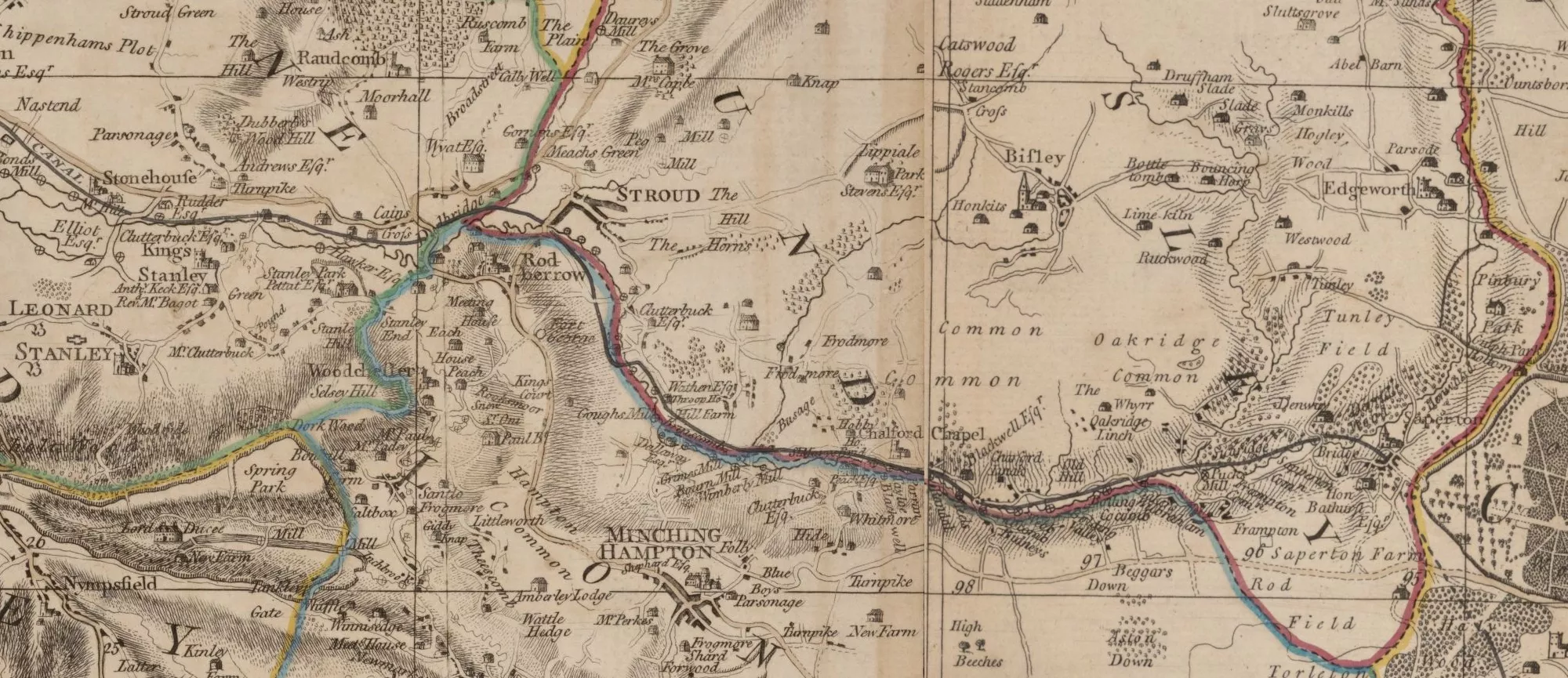
Map of Stroud, c1777. Isaac Taylor/William Faden
Combination of two sheets to show Stroud and surrounding area.
PublicationMapDateSourceCC-BY-NLS Reproduced with the permission of the National Library of Scotland