
History of Thrupp Mill
Thrupp Mill was situated on the River Frome, just to the south of the present A419 Stroud to Cirencester Road. Several leet’s branched off through the site to power waterwheels.
There is no known photograph of the site dating from the 19th century. Had the traveller stopped here between 1828-1863 they would have seen to the left the corner of the original Phoenix Foundry & Ironworks buildings sweeping down and Thrupp Mill to the right behind the perimeter fence and trees. The majority of the early industrial buildings were on the site of what is currently (2025) the car park of Impcross Ltd, who continue precision manufacturing on the site.
Over its lifetime the mill was known by various names: Thrupp Mill; Sewell's Mill; Huckville Mill; Wathen's Mill; Ferrabee (Phoenix) Ironworks.
There was a medieval fulling mill on this site associated with Huckville's Court. In his will of 1540, Thomas Sewell, a clothier, bequeathed to his son Thomas "my dwelling house, fullyng mylles and dyeing house" together with his "vattes and furneys with sheares and other shoppe stuffe".
In 1608 Thrupp Mill was owned by a clothier named Richard Sewell. On his death in 1635 he owned two fulling mills, one gig mill and one grain mill called Huckvales Court.
In 1708 Huckvale's Court and Sewell's Mill were conveyed to Jeremiah Davis and Richard Baker, and in 1752 let to Samuel Wathen, a member of the well-known family of clothiers, who subsequently purchased the estate.
After Samuel Wathen died his widow, Elizabeth, let "all that clothing mill" which contained five pairs of stocks, with the gig mill house, presshouse, dyehouse, stove, picking shops and rack meadow, to John Ferrabee in 1828. Ferrabee set about converting the mill for use as an iron foundry. Two waterwheels at the east end of the building and the fulling stocks were removed. Ferrabee became well known for producing waterwheels, textile machinery, agricultural implements, and Budding's lawnmowers.
The mill was demolished some time before 1901 as it is no longer marked on the Ordnance Survey maps of this year.
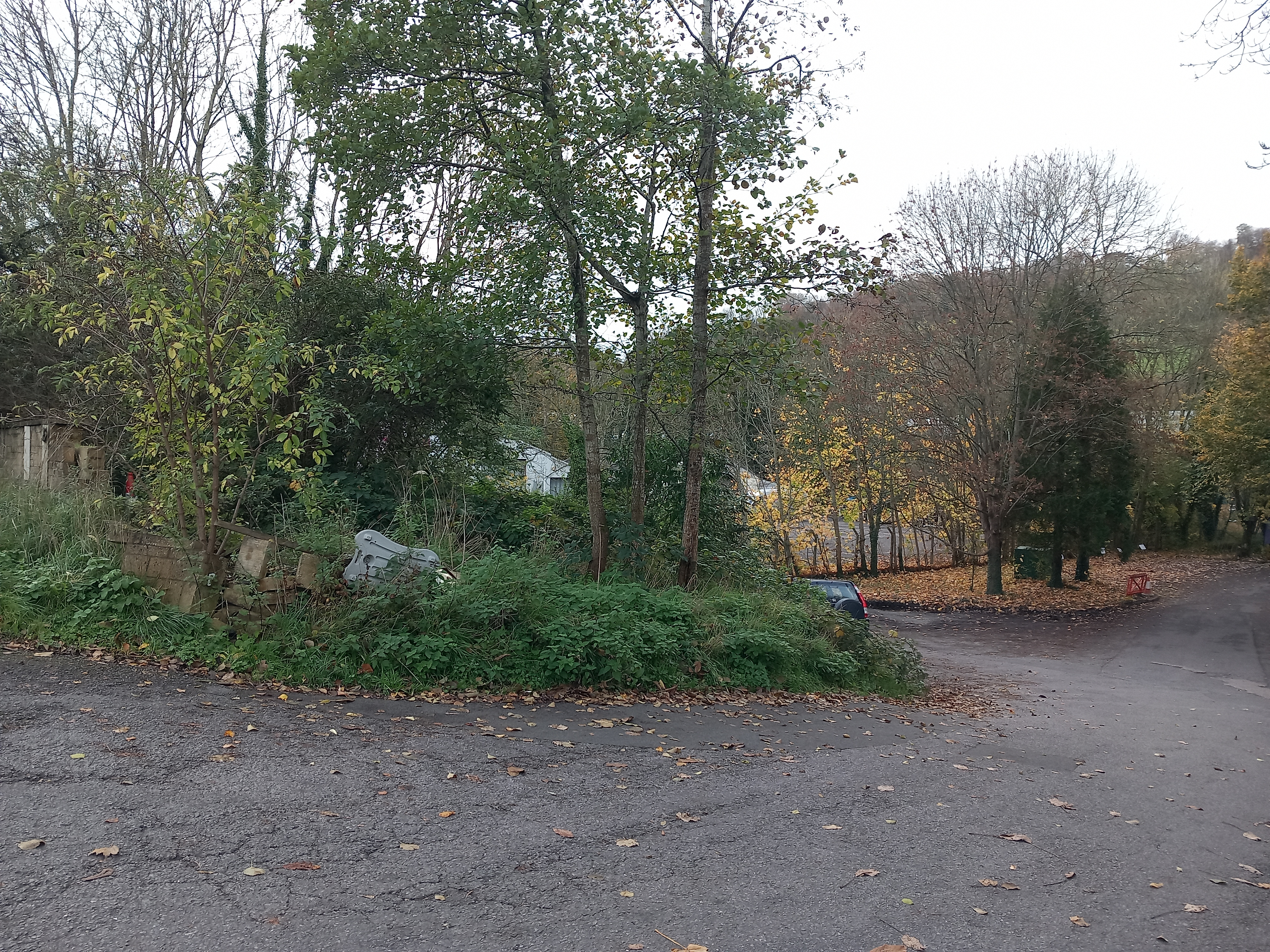
Site of Thrupp Mill.
PublicationOtherDate